
AI Practice · Your team builds
Help your engineering team use AI
Your engineers keep the code and release decisions. BluePi helps them test AI on one recurring task in their repository, then leaves them a method they can run themselves.
01
BluePi’s AI-assisted software delivery method
A software delivery process runs from a request to a released change. BluePi tests where AI can help along that path without losing the checks that keep the software useful and safe. We start with a type of work your team repeats and follow it through the real repository and release process.
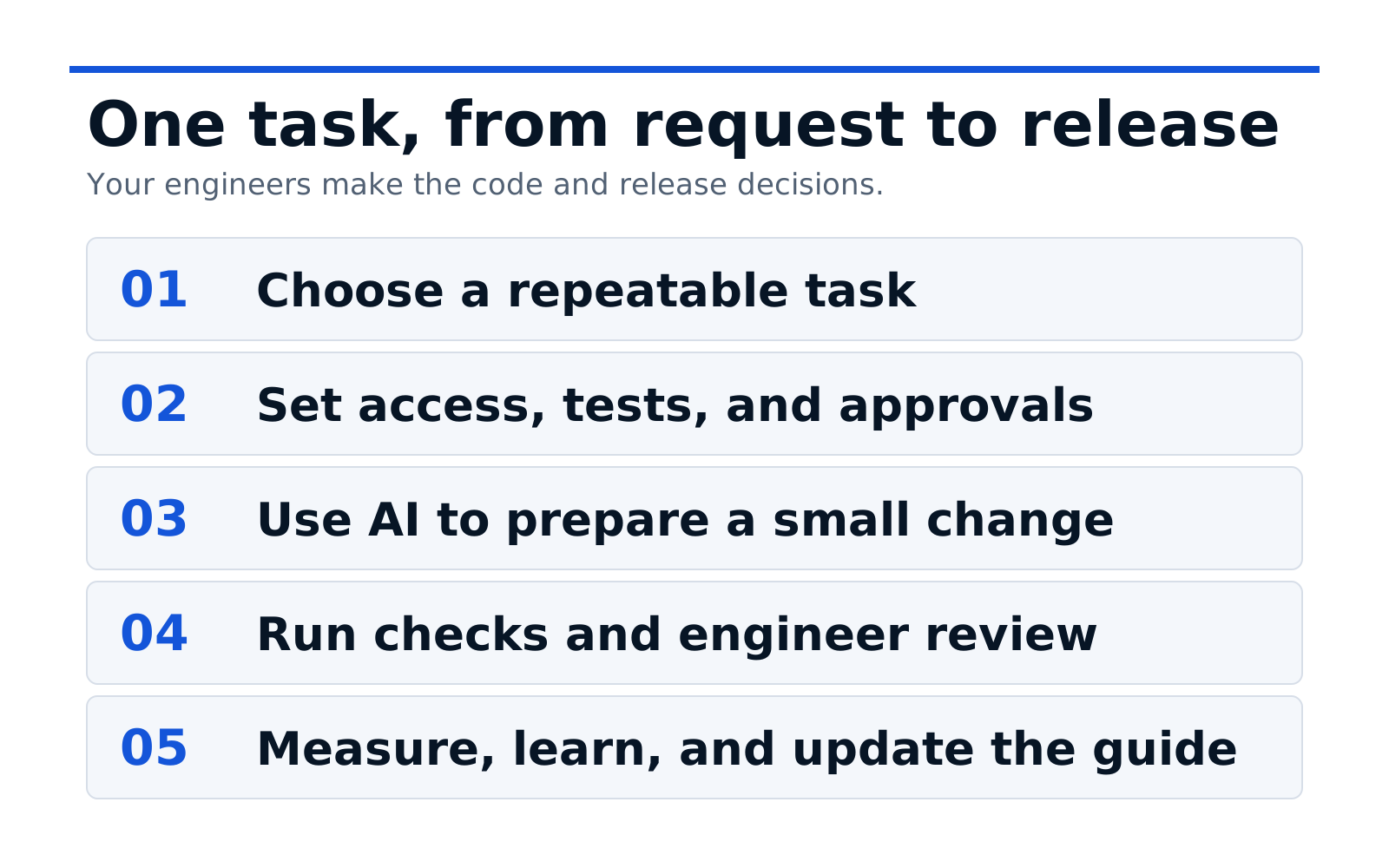
First, choose a task with clear checks for the expected behaviour. Next, make repository guidance, tool access, and approval rules visible. An AI tool can then inspect and prepare a small change in an isolated workspace. Tests run against the change, and an engineer checks what it does before deciding whether it can merge. After release, the team records rework, defects, and review time. Those results shape the next task.
This is BluePi’s working method for the pilot. The customer’s process and risk rules decide the exact tools and release gates.
- Choose a suitable task and record how the team handles it today
- Set access, acceptance, test, and approval rules
- Let approved tools assist with a bounded change
- Check the result in tests and engineer review
- Measure the work and update the team’s guidance
02
Start with a readiness review, then a controlled pilot
The readiness review maps one team’s work, current measures, repositories, tests, and security limits. It identifies a task that can be checked fairly. BluePi recommends a pilot, foundation work, or no further investment based on what the review finds.
If the task is suitable, BluePi runs a pilot with one team, one repository, and one recurring type of change. Your engineers approve the task and review the code. Your existing release authority decides what reaches production. BluePi coaches the team, records the evidence, and checks whether the method helped without increasing review burden or defects.
03
What a pilot leaves behind
For a selected task, the team receives a short repository guide: which files the tool may read, how to run tests, what needs engineer review, and who can merge and release. The pilot record shows the request, AI-assisted change, test result, review notes, time spent, and any rework. Your engineers practise a normal case and a failed case before BluePi steps away.
BluePi recommends where the method should expand, change, or stop. A faster code draft only counts as progress if review time, rework, and defects remain acceptable. No improvement percentage is assumed before the pilot.
04
When another offer fits better
If you need BluePi to own the application build, use application delivery. If you need AI to read or act on business information inside a product, use business workflow delivery. The engineering pilot changes how your team works; it does not transfer its release responsibility to BluePi.
Who writes and releases the software in this engagement?
Your engineers do. BluePi helps the team set up and test a way to use approved AI tools in its own repository. Your existing reviewers and release owners keep their authority.
What does the first pilot cover?
One team, one repository, and one recurring type of task. BluePi records the current process, sets access and review rules, runs representative tasks with the team, and compares the results with the starting point.
What do we receive after the pilot?
You receive repository guidance, approved task examples, tests and review rules, a record of the pilot results, training, and a recommendation to expand, change, or stop the method.
Start with one engineering task.
Bring a recurring task, the repository behind it, and the people who review and release the work. We will check whether it is suitable for a pilot.
Discuss a readiness review